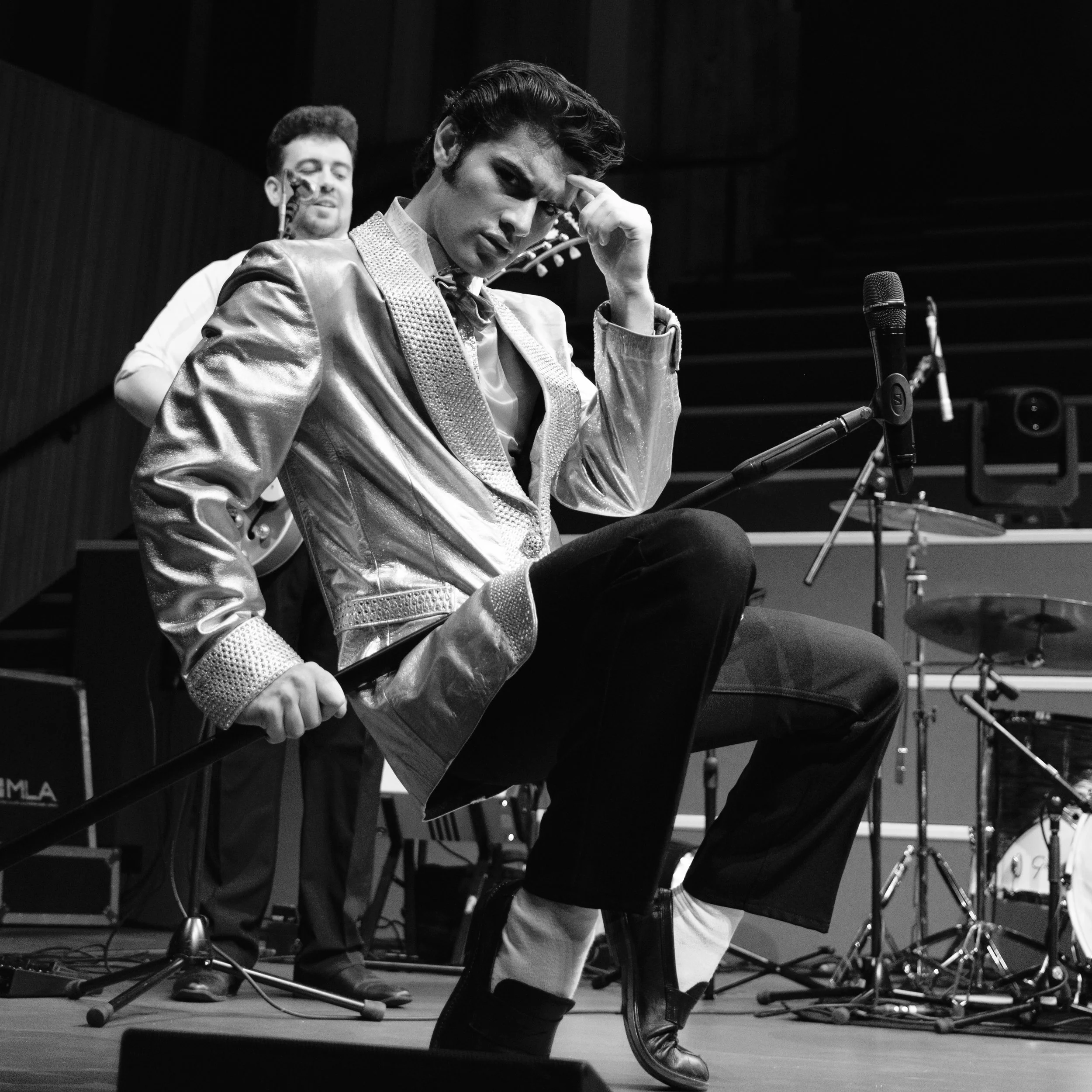
Photographing Emilio Santoro as Elvis at The Halls Norwich
Photographing Emilio Santoro as Elvis at The Halls Norwich — a speculative approach that became an opportunity to create a series of timeless black-and-white live music photographs.
Sometimes a photography opportunity begins with a commission. This one began with a ticket.
I had already booked to see Emilio Santoro perform his Elvis show at The Halls Norwich on 26 September 2026. I was going as part of the audience rather than as the official photographer, but knowing the kind of performance I was going to see, I thought there could be an opportunity to create something interesting.
So, before the concert, I contacted Emilio.
I explained that I was a professional photographer based in Norwich, that I would be attending the show and that I would like to bring a camera and photograph some of the performance from my seat. There was no commission involved and no expectation attached to it. I simply asked for permission to shoot and offered Emilio the resulting photographs afterwards.
He very kindly agreed.
Photographing From the Audience
That meant approaching the evening rather differently from a conventional concert photography assignment.
I was sitting in the front row at The Halls, so there would be no moving around the venue looking for different angles and no working from a photography pit. Everything had to be photographed from essentially one position.
Rather than seeing that as a restriction, I decided to work with it.
I took the Fujifilm X100VI — a small, fixed-lens camera that allowed me to photograph discreetly without interfering with the experience of the people around me. No flash, no elaborate equipment and no attempt to turn an evening in the audience into a full production.
The challenge was simply to watch, anticipate and photograph at the right moment.
A Black and White Approach
From the outset, I knew I wanted the photographs to be predominantly black and white.
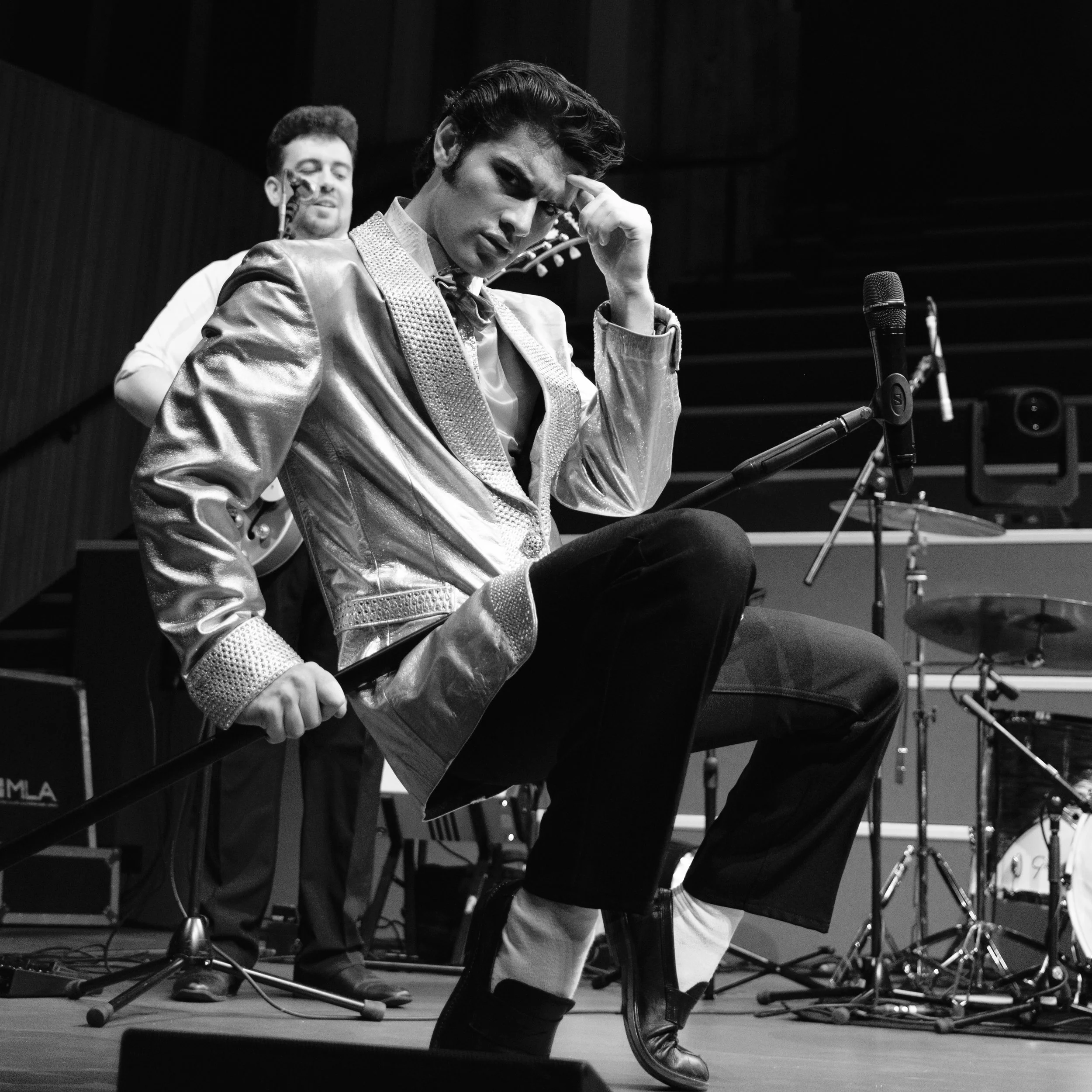
Emilio Santoro performing as Elvis Presley at The Halls Norwich, photographed in black and white by Daniel Mason Photography.
Emilio's show celebrates the younger Elvis Presley, accompanied by his 1950s-style live band, The Creoles. Rather than producing photographs that looked overtly contemporary, I wanted the images to feel as though they might belong to the period that inspired the performance.
That meant thinking less about conventional modern concert photography and more about old press photographs, television stills and music photography from the 1950s and 1960s.
As the performance moved towards the later Elvis material, there were also moments that immediately brought to mind the stark visual character of the 1968 Comeback Special — particularly Emilio isolated against a dark background under the stage lighting.
Black and white felt completely natural.
Waiting for the Moment
Working with a fixed lens from a fixed seat changes the way you photograph a performance.
You cannot solve every composition by changing position or reaching for another lens. Instead, you have to wait.
I watched Emilio's movement around the stage, the direction of the lighting, his interaction with the microphone and the moments between the bigger gestures.
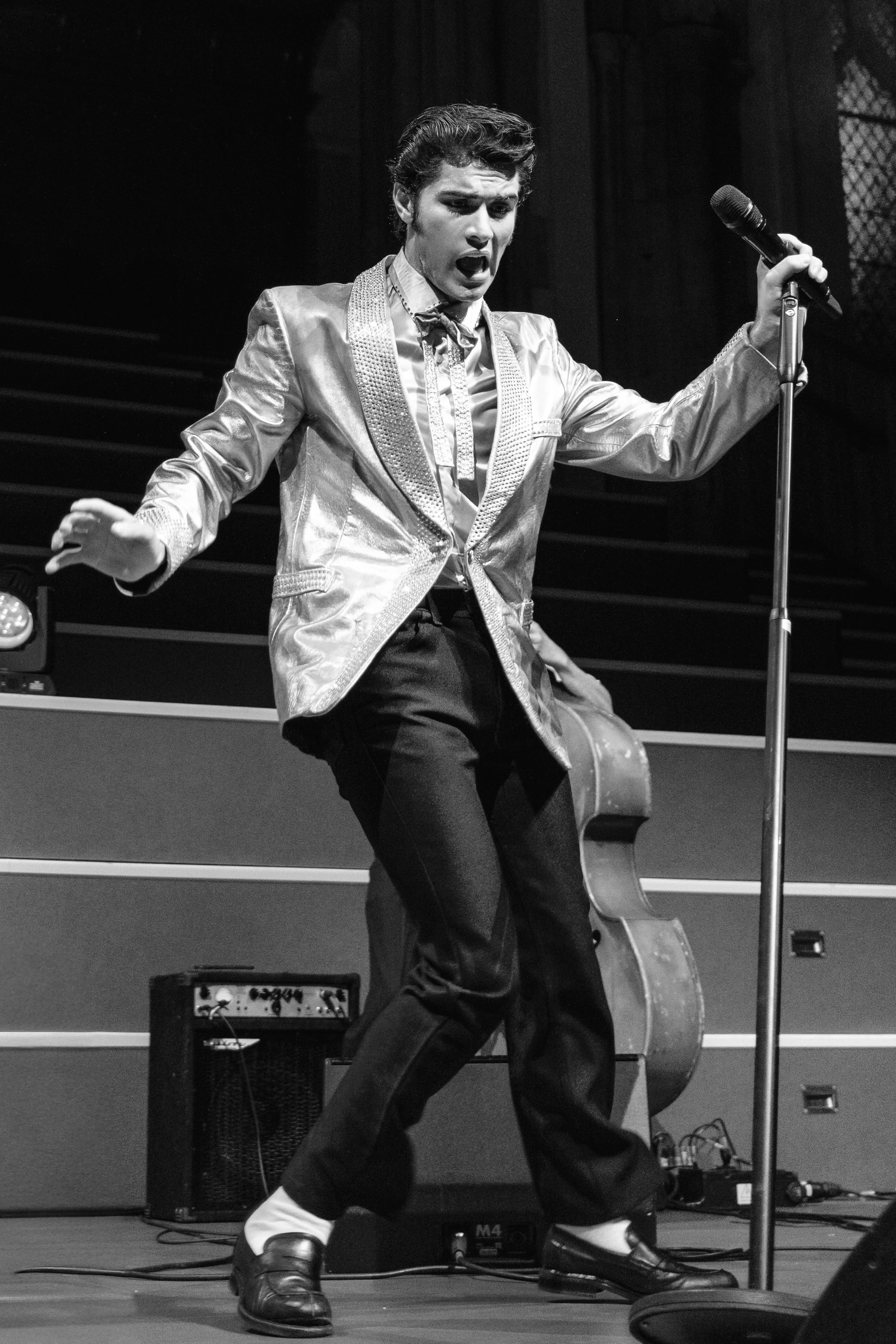
Emilio Santoro performing as Elvis Presley on stage at The Halls Norwich during his 2026 concert.
Those quieter fractions of a second can often make the strongest photographs.
Rather than trying to document every part of the concert, my aim was to produce a relatively small collection of images that captured the character of the performance.
The simplicity of the X100VI suited that approach perfectly. It allowed me to concentrate on what was happening on stage rather than on equipment.
Emilio Santoro as Elvis
Of course, this approach only works when there is something worth photographing.
Emilio was crowned the 2024 Ultimate Elvis Tribute Artist World Champion by Elvis Presley Enterprises at Graceland, and seeing the show live makes it easy to understand the recognition.
This isn't simply about costume or impersonation. The movement, expression and stage presence provide a photographer with those fleeting moments where the resemblance and atmosphere suddenly come together.
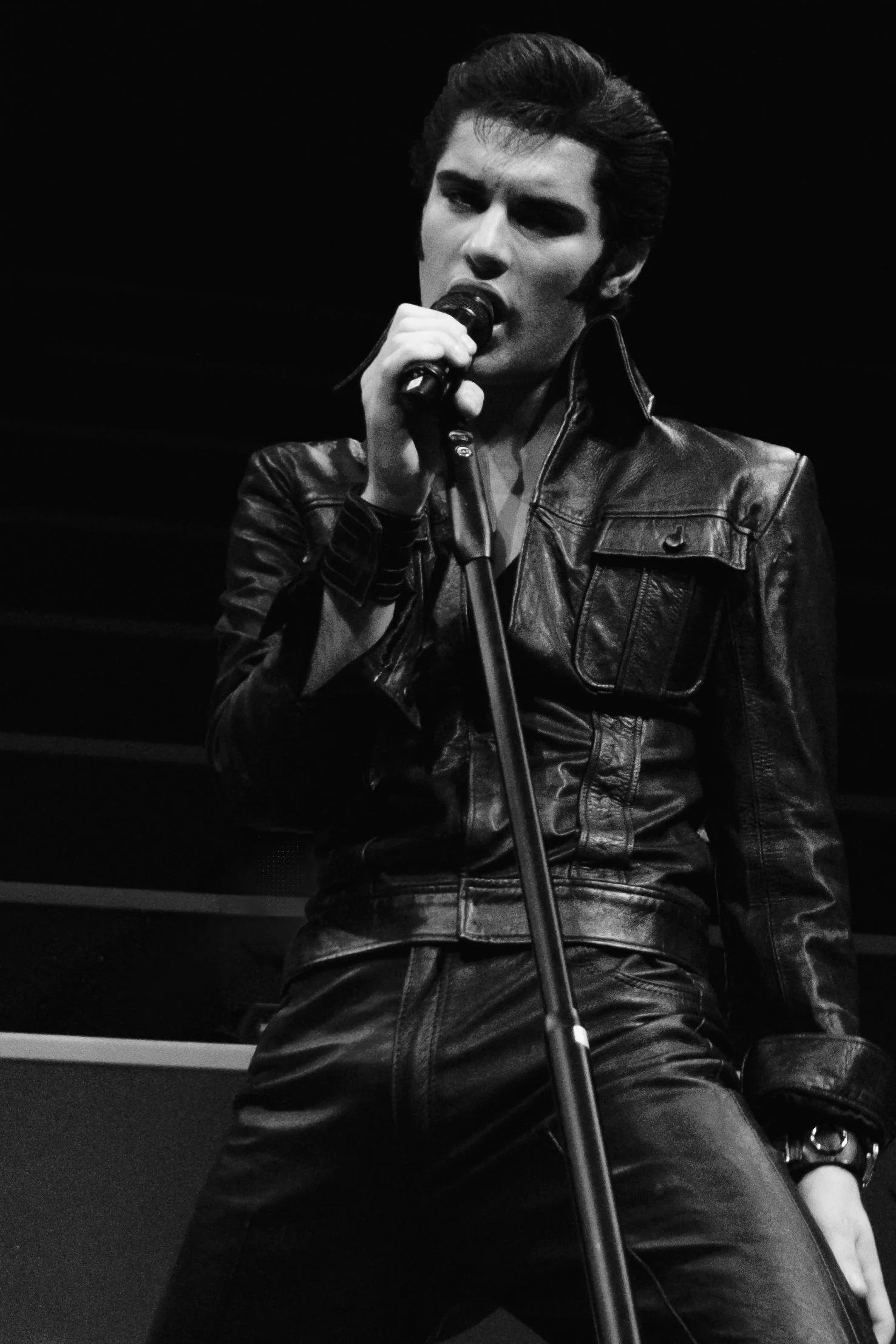
Emilio Santoro as Elvis Presley in black leather at The Halls Norwich, evoking the iconic 1968 Comeback Special.
Those were the moments I was looking for.
Not necessarily the biggest gesture or brightest lighting, but the split second that could exist as a photograph independently of the performance itself.
From a Speculative Email to a Finished Gallery
After the concert, I edited the photographs and sent Emilio the completed gallery.
That was always part of the idea.
There had been no commission and no obligation on his part. Emilio had simply been generous enough to allow another photographer to document his performance, and in return he received the finished photographs to use.
For me, that's also one of the pleasures of photographing live music.
Not every worthwhile photography project needs to begin with a booking. Sometimes it starts because you see the possibility of making something worthwhile, approach somebody professionally and see where it leads.
On this occasion, it began with an email and a camera taken along to a concert I was attending anyway.
It ended with a collection of black and white photographs that feel entirely at home with the music and period that inspired them.
And that's exactly what I wanted to create.
Daniel Mason Photography
Live music, concert and editorial photography in Norwich, Norfolk and across the UK.
A Wedding at The Assembly House, Norwich
A documentary approach to wedding photography at The Assembly House in Norwich, capturing the atmosphere, quiet moments and character of one of the city’s most distinctive wedding venues.
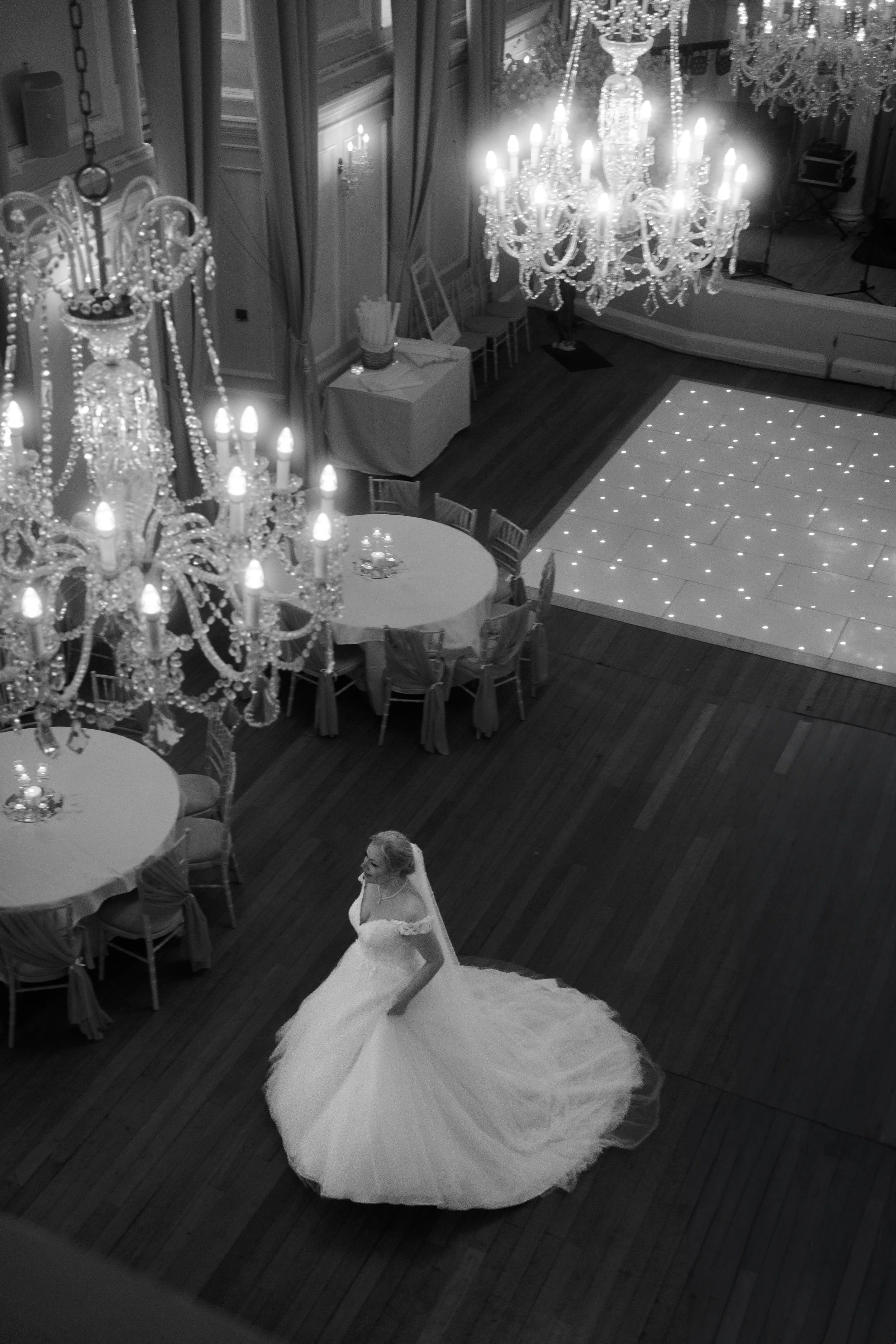
The Assembly House is one of those Norwich wedding venues that immediately gives a photographer something to work with.
Its Georgian architecture, elegant interiors, tall windows and unmistakable character provide a wonderful setting for a wedding. But as impressive as the surroundings are, what interests me most isn't simply the grandeur of the building.
It's what happens within it.
The quiet exchanges, nervous anticipation, laughter, fleeting expressions and all the little interactions that make one wedding completely different from another.
Those are the things I'm looking for.
Photographing the day rather than directing it
My approach to wedding photography is predominantly documentary.
I don't want a wedding day to become a photoshoot with a ceremony attached to it.
There will always be moments when a little direction is useful. Family photographs matter, and I'm happy to step in when something needs organising or when we're creating a portrait together.
For most of the day, however, I would much rather watch, anticipate and photograph things as they genuinely happen.
A glance across a room. Someone laughing when they don't realise they're being photographed. A nervous expression before the ceremony. Hands being held. Friends and family reacting to something happening elsewhere in the room.
Individually, these moments can seem insignificant.
Collectively, they're the story.
A wedding venue with a real sense of Norwich
The Assembly House has a character that is unmistakably Norwich.
For me, that's important.
I don't want to photograph a wedding somewhere as distinctive as The Assembly House and produce pictures that could have been made anywhere. The architecture and interiors should contribute to the photographs and give them a sense of place.
At the same time, the venue shouldn't overwhelm the people.
The building provides the setting.
The people provide the story.
Finding the balance between the two is where it becomes interesting.
The Assembly House also offers something I particularly enjoy working with: interesting natural light. Rather than imposing the same photographic style on every location, I prefer to see what the building gives me and work with it.
That can mean beautiful window light for a portrait, deeper shadows within one of the rooms or simply recognising a composition and waiting for the right moment to happen within it.
The photographs between the photographs
Some of my favourite wedding photographs aren't necessarily the ones anybody expects beforehand.
They're often the frames made immediately before or immediately after the photograph everyone knows is coming.
The reaction rather than the event itself.
A conversation happening at the edge of the room.
Someone momentarily lost in thought.
The expression after somebody thinks the camera has moved away.
These are photographs that can't really be planned because you don't know they're going to happen.
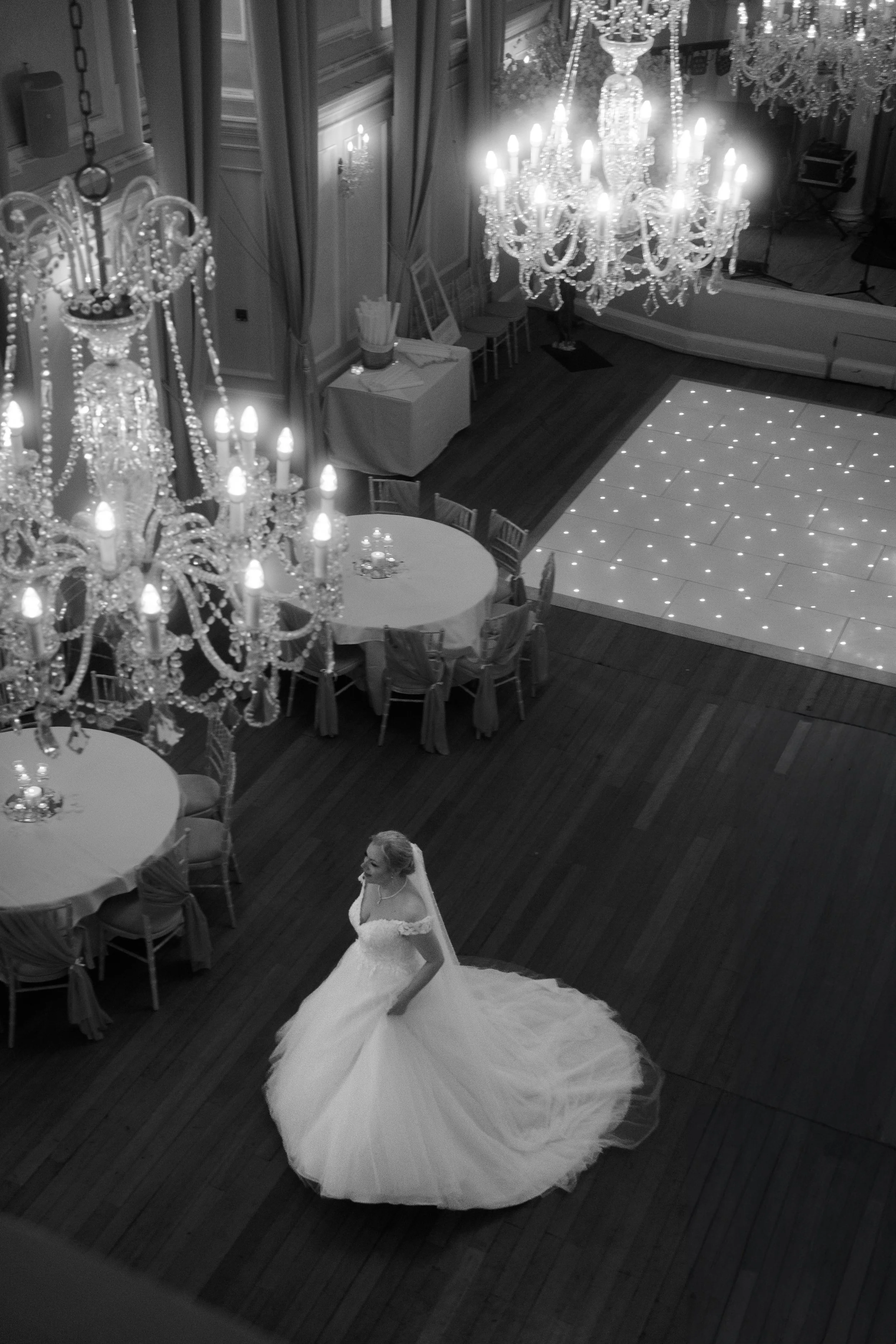
You simply have to be watching when they do.
And I think they're important.
Years later, those pictures can trigger memories of people, conversations and moments that might otherwise have been forgotten.
That's ultimately what I want a wedding collection to do.
Not simply show what everything looked like.
I want it to remind people what the day felt like.
When a photograph belongs in black and white
Anyone familiar with my photography will know that black and white plays an important part in my work.
But I don't convert a photograph to monochrome simply because it makes it look more artistic.
There has to be a reason.
Sometimes colour is an important part of the photograph and absolutely deserves to remain. At other times it contributes very little.
Removing it can strip a photograph back to expression, gesture, light and composition — the things that actually made me press the shutter in the first place.
Weddings are particularly suited to this because so much of what interests me happens in expressions and interactions.
The Assembly House gives me plenty to work with tonally too. Window light against darker interiors, formal architecture, bright highlights and the contrast between people and their surroundings can all work beautifully in monochrome.
The decision is always made photograph by photograph.
Sometimes colour tells the story.
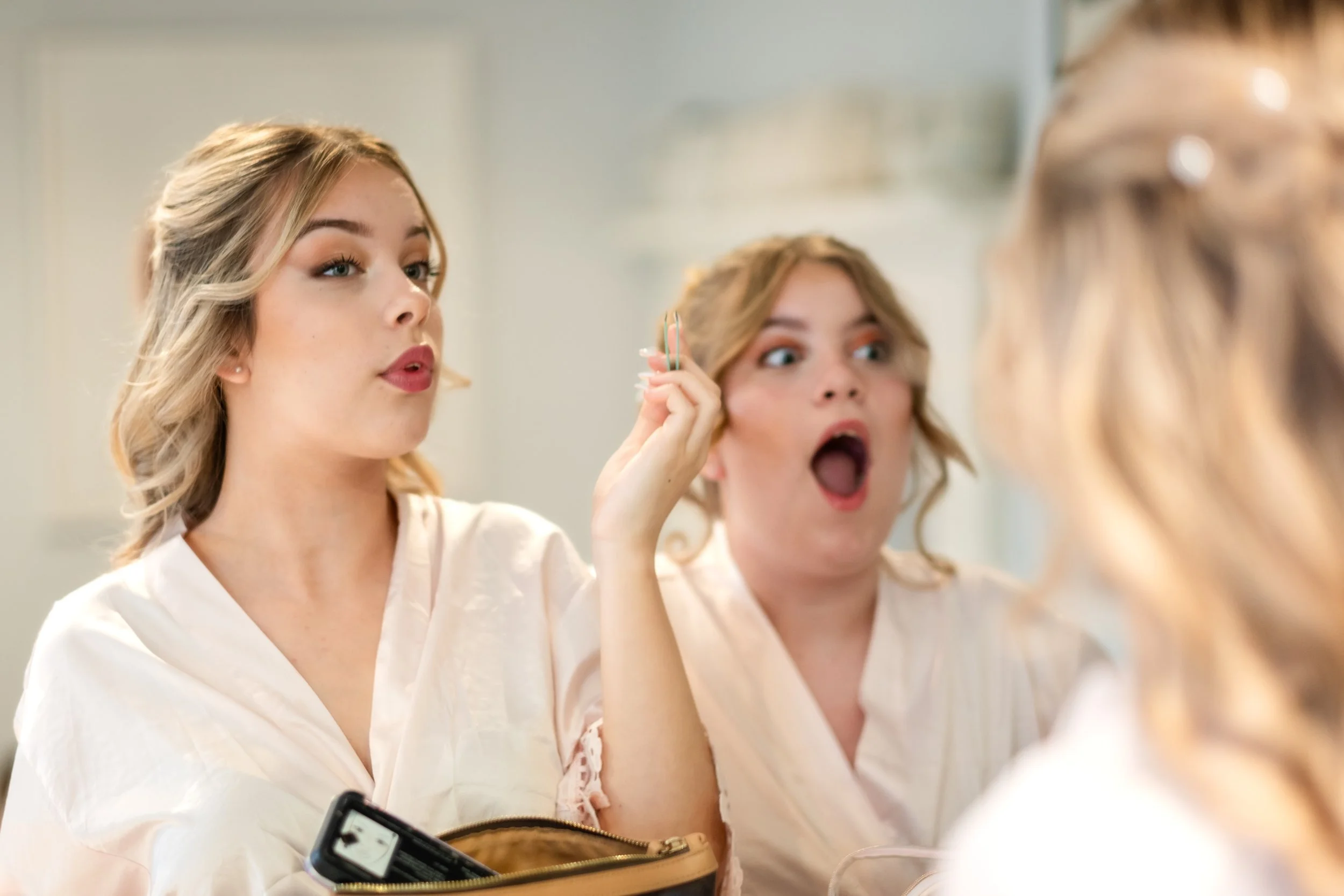
Sometimes it gets in the way.
Portraits without turning the wedding into a photoshoot
Documentary wedding photography doesn't mean I won't make portraits.
I just don't believe a couple should disappear from their own wedding for an hour while the photographer constructs dozens of photographs.
A venue like The Assembly House gives us plenty of opportunities to make a few considered portraits without dominating the day.
The architecture, available light and surroundings are already there. My job is to recognise what's available, offer some direction when it's useful and then allow the couple to be themselves.
I would rather come away with a handful of portraits that actually mean something than fifty variations of essentially the same photograph.
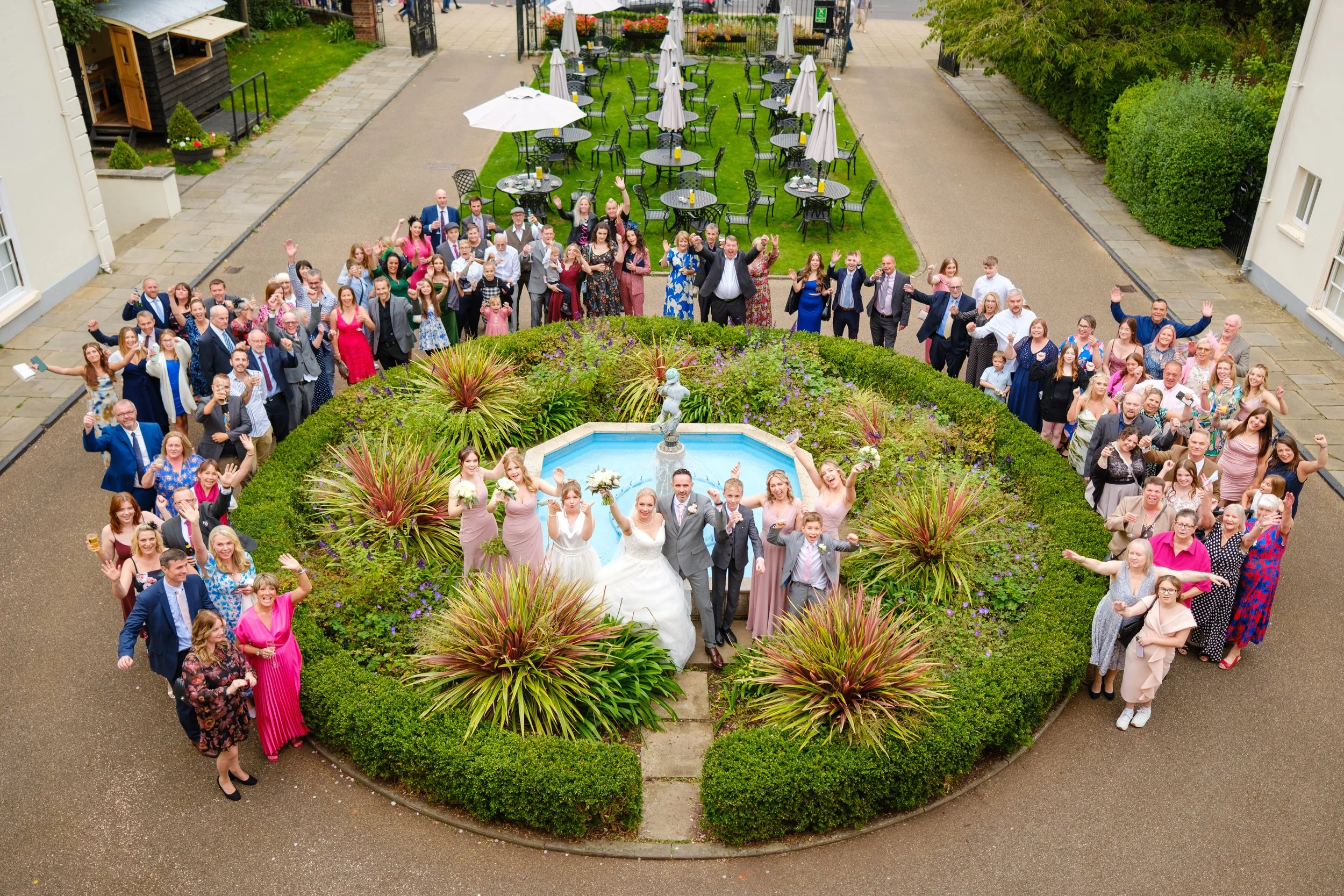
Then they can get back to their wedding.
Telling the whole story
A wedding isn't just the ceremony, the couple portraits and the first dance.
It's everything happening around those things.
That's why I think about wedding photography as a collection rather than simply a series of individual hero images.
There will naturally be photographs that stand out on their own, but the real value comes when everything is seen together.
The big moments establish what happened.
The smaller moments give the story its personality.
And sometimes a photograph that seems relatively ordinary immediately after the wedding becomes one of the most important pictures in the collection years later.
You can never entirely know which one that's going to be.
That's another reason I keep watching.
Photographing weddings at The Assembly House
Every wedding reinforces something I've believed for a long time: the venue matters, but the people matter more.
The Assembly House is a beautiful backdrop. It brings history, elegance and a very particular Norwich character to a wedding.
But ultimately my photographs aren't really about the building.
They're about the people who happened to fill it on that particular day.
That's what makes photographing weddings interesting to me.
I could return to The Assembly House, stand in the same rooms and work with the same light, but I would never photograph exactly the same wedding twice.
Planning your own Assembly House wedding?
If you're planning a wedding at The Assembly House, elsewhere in Norwich or across Norfolk and you're looking for photography centred around real moments, atmosphere and storytelling rather than spending your wedding day constantly posing for the camera, you can see more of my approach and wedding work below.
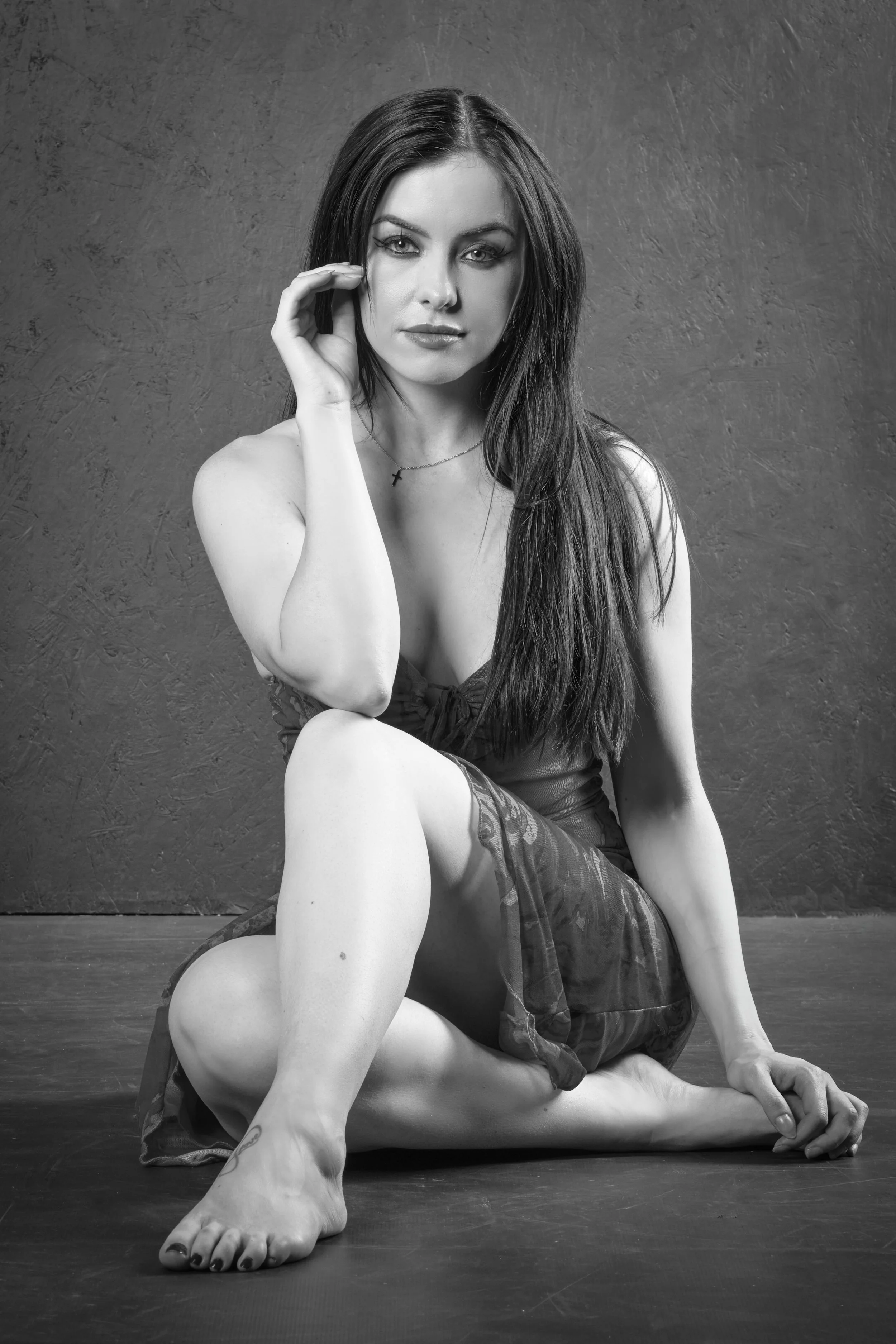
Inside an Editorial Studio Photoshoot: How I Prepare
Go behind the scenes of an editorial studio photoshoot, from developing the initial concept and visual language to planning wardrobe, lighting and sets. I share how careful preparation creates the freedom for collaboration, experimentation and unexpected moments in front of the camera.
An editorial studio photoshoot begins long before anybody steps in front of the camera.
Before the first frame, there is an idea to develop, a visual language to establish and a series of creative decisions to connect. Wardrobe, casting, hair, make-up, sets and lighting all need to feel as though they belong to the same world.
Without that preparation, it is easy to produce a collection of individually attractive photographs that never quite become a story.
My aim is not to control every image before the shoot begins. It is to create a strong enough foundation that everybody involved can contribute confidently, while leaving room for the unplanned moments that often become the most interesting photographs.
Beginning with the central idea
I usually begin with a feeling rather than a finished image.
The starting point might be a piece of music, a character, an item of clothing or a particular quality of light. It could come from a film, painting, location or simple contrast: elegance against something raw, softness within a severe composition, or formal styling photographed with a sense of spontaneity.
At this stage, I am looking for the idea at the centre of the shoot.
What should the photographs make somebody feel? Who inhabits this world? What makes the concept more than a collection of clothes and attractive lighting?
If I cannot describe the idea clearly, it probably needs more development.
I often reduce it to a short creative statement or a handful of words. These might be theatrical, restrained and uneasy; romantic, faded and intimate; or bold, graphic and controlled.
Those words become a reference point for everything that follows.
Developing the visual language
Once the central idea is clear, I begin exploring how it should look.
I consider colour, texture, composition and movement. I think about the emotional distance between the subject and the viewer. Should the images feel immediate and confrontational, or should the person appear absorbed within their own world?
This is where a mood board becomes useful.
A good mood board is not simply a collection of photographs I like. Each reference should communicate something specific about the proposed shoot.
It might demonstrate:
A quality or direction of light
A colour relationship
The silhouette of a garment
An approach to movement
A type of composition
The texture of a background
Hair or make-up direction
The emotional tone of the subject
References do not need to come exclusively from fashion photography. Film stills, paintings, architecture and fragments of design can communicate an idea without encouraging us to reproduce another photographer’s work.
The mood board gives the team a shared language. It defines the world without dictating every photograph we will make inside it.
Thinking in sequences
An editorial is not built around a single hero image.
The individual photographs matter, but so does the relationship between them. A successful series needs rhythm, variation and a sense of progression.
Before the shoot, I consider the different roles the images might play.
There may be a direct opening portrait, a wider frame that establishes the set and a quieter detail that slows the pace. A controlled composition might sit beside something with greater movement. One image may reveal the complete look while another concentrates on expression, gesture or texture.
I do not want every photograph to have the same scale or energy.
The sequence becomes more engaging when it moves between intimate and distant, restrained and expressive, still and kinetic. Those contrasts give the story room to breathe while the central visual language holds everything together.
Casting and character
Casting influences the entire direction of an editorial.
I am interested not only in somebody’s appearance, but in the presence they can bring to the idea. The way a model moves, holds eye contact or responds to direction may be more important than whether they resemble an early reference.
Different concepts require different qualities.
One shoot may depend on strong physical movement and expressive posing. Another might rely on restraint, with the smallest shift in posture carrying the frame.
Once the model is confirmed, I allow their individuality to influence the plan. They should not be treated as an interchangeable figure placed inside a concept.
The original idea provides direction. The person in front of the camera gives it life.
Developing the wardrobe
Clothing is one of the primary storytelling elements within an editorial.
I consider how each look contributes to the series rather than viewing the outfits separately. We need enough variation to sustain the story, but the clothes must still feel as though they belong to the same visual world.
Working with a stylist, designer or the subject’s own wardrobe, I look at:
Shape and silhouette
Colour
Fabric and texture
Layering
Accessories
Movement
The transition between looks
How each garment will react to the light
The strongest outfit in isolation is not necessarily the strongest choice for the editorial. A piece may be beautiful but disrupt the colour or mood of the complete sequence.
Other garments reveal their value only when they are placed within the set. A restrained look can become striking when its shape, background and lighting begin to interact.
I also remain realistic about the number of changes we can photograph well. A smaller collection of fully explored looks will usually create a stronger editorial than a rushed attempt to include everything.
Planning hair and make-up
Hair and make-up help define the character of the story.
The direction might be polished and minimal, allowing expression and light to dominate. Alternatively, the concept may call for something graphic, sculptural or overtly theatrical.
If a hair or make-up artist is involved, I share the wider creative direction rather than sending a single isolated reference. Understanding the story gives them room to contribute rather than simply reproduce an existing look.
We also consider whether the styling should evolve during the day.
Starting with a relatively clean treatment can allow us to build towards something stronger. This creates different chapters within the editorial without repeatedly returning to the beginning.
Continuity matters throughout. Hair, make-up, wardrobe and lighting should feel connected, even when each element changes.
Designing the sets
A studio provides the opportunity to construct an environment rather than simply find one.
That environment does not need to be elaborate. A plain background and carefully controlled light can create an exceptionally strong editorial image.
For other concepts, furniture, fabric, painted surfaces or selected props may help establish a more complete world.
Every element needs a reason to be present.
I ask what a set contributes to the character, composition or story. Does it introduce texture? Does it create shape around the model? Does it offer something with which they can interact?
If an object merely fills an empty space, it probably does not belong.
I also consider how the sets will function practically. Changes need to be achievable within the schedule, and the model must have enough space to move safely.
Two or three properly developed setups will usually produce a more convincing series than repeatedly rebuilding the studio in pursuit of quantity.
Designing the light
Light carries much of the emotional character of a studio editorial.
Soft, wrapping light can create intimacy and elegance. A harder source produces defined shadows and a more graphic result. Controlled areas of illumination can make a simple studio feel theatrical or cinematic.
Before the shoot, I plan an initial approach for each setup.
The decision begins with atmosphere rather than equipment. What should the light make us feel? How should it reveal the clothes, face and set?
I then consider the technical choices required to produce that effect.
Fabric is particularly important. Reflective materials react very differently from velvet or heavy wool. Dark clothing may need separation from the background, while pale garments require enough control to preserve their detail.
The lighting plan gives me an efficient starting point, but it remains flexible.
Once the complete look is in front of me, I make adjustments based on the model’s face, movement and the way the materials respond. The setup must serve the photograph rather than becoming a technical exercise.
Creating the shot list
An editorial shot list should provide structure without turning the day into a checklist.
I identify the essential combinations of looks, sets and compositions. I also think about what the final sequence will need: close portraits, full-length frames, details, movement and images that establish the wider environment.
If the photographs have a specific destination, I take that into account. A magazine layout, album campaign, website or social-media series may require different orientations and amounts of negative space.
The shot list protects the essentials when the day becomes busy.
What it cannot do is predict the best photograph.
I never want to become so concerned with crossing off planned frames that I overlook what is happening in front of me. If an unexpected combination of expression, movement and light begins to work, the list can wait.
Scheduling the day
Editorial shoots involve several connected processes.
Hair, make-up, wardrobe preparation, lighting tests and set changes all require time. The schedule must also allow for breaks, adjustments and the possibility that an idea deserves longer than expected.
I work backwards from the time we need to begin photographing and build a realistic order around the creative plan.
The sequence may be influenced by hair and make-up. A dramatic look that cannot easily be reversed will usually come later. A complicated set may need to be photographed before the studio is rearranged for something simpler.
The order should also support the person in front of the camera.
Beginning with an accessible setup allows us to establish a rhythm before moving into more physically or emotionally demanding ideas.
A schedule that works only if nothing changes is not a useful schedule. Preparation should create space rather than pressure.
Preparing the equipment
My equipment choices follow the visual idea.
I select cameras and lenses based on the intended compositions, then prepare the lighting, modifiers, backgrounds and stands required for each setup. Batteries are charged, storage is prepared and essential equipment has a backup.
I also organise everything to make transitions as efficient as possible.
The purpose is not to fill the studio with equipment. It is to have the right tools ready when the story requires them.
Technical preparation should become almost invisible once the shoot begins. The less attention I need to give preventable equipment problems, the more attention I can give to the model, the team and the images taking shape.
Creating the right atmosphere
The environment on set influences the photographs.
Everybody needs to understand the idea and feel able to contribute. Communication should be clear, the pace should feel purposeful and the person being photographed should know what I am asking from them.
Direction needs to be specific enough to be useful.
Instead of asking for something vague such as “more editorial”, I might describe the character, demonstrate a movement or explain what the composition needs. Sometimes I use music or give the model an action rather than asking them to hold a fixed pose.
I also pay attention to the energy in the room.
There are moments when maintaining momentum is important and others when the best decision is to pause. Continuing to photograph an idea that is not working rarely makes it better.
Creating an atmosphere of trust and concentration is part of the photographer’s responsibility.
Preparing for change
However carefully a shoot is planned, something will change.
A garment may behave differently beneath the lights. A planned composition might feel too obvious once every element is assembled. The model may bring an energy to the set that suggests another direction.
Preparation allows me to respond rather than panic.
Because the essential images and practical details have already been considered, I have room to explore a worthwhile departure from the plan.
Sometimes the unexpected change becomes the element the story was missing.
Leaving room for discovery
By the day of the shoot, I want to understand the concept, know what we need to create and have a clear place to begin.
Then I want to remain open.
The model may interpret the character in a way I had not imagined. A stylist may adjust a garment between frames and completely alter its shape. A test image may reveal a lighting effect more interesting than the one I originally intended.
These moments cannot be placed on a shot list.
They happen because a prepared team has enough confidence to experiment. When the fundamental decisions have already been made, we can pay attention to what is actually unfolding.
That is the balance I look for in editorial photography: intention without rigidity.
Shaping the final story
The editorial is completed during the edit.
I am not simply looking for the strongest photographs individually. I am considering how they work together.
There should be variation in scale, expression and energy. One image may provide immediate impact while another creates a quieter pause. Repetition can establish a motif, but unnecessary duplication weakens the sequence.
The final treatment helps bring everything into the same visual world. Colour, contrast and texture should support the atmosphere established during the planning rather than being applied as an unrelated style afterwards.
Retouching should refine the image without removing the character that made it interesting.
The finished series should feel coherent, but not overworked.
Why preparation matters
When an editorial succeeds, the final photographs can appear effortless.
The viewer does not see the planning, testing, scheduling and practical decisions behind them. They see a world that appears to exist naturally within the frame.
That illusion is built from many connected choices.
I prepare thoroughly so that, when the shoot begins, I can stop thinking about administration and concentrate on what cannot be planned: expression, movement, collaboration and the brief moment when every element falls into place.
The preparation gives us direction.
The people in the studio give the editorial life.
If you are a designer, stylist, model, musician or creative team developing an editorial studio project, I would be glad to hear about it. I am based in Norfolk and available for commissioned photography and creative collaborations throughout the UK.
Why I Photograph Weddings in Black & White
One of the questions I'm asked most often is whether I photograph weddings entirely in black and white.
The answer is simple: absolutely not.
A wedding day is full of colour. The flowers you've spent months choosing, the subtle tones of a summer evening, the rich colours of the venue, and the excitement of the celebrations all deserve to be remembered exactly as they were. Colour tells part of the story, and I would never want to take that away.
So why do I include black and white images?
Because some moments transcend colour.
There are occasions during every wedding where the emotion becomes far more important than the surroundings. A quiet glance between a couple before the ceremony. A father seeing his daughter in her dress for the first time. A reassuring hand held during the speeches. The tears, the laughter, the anticipation. These are the moments where colour can become a distraction rather than an enhancement.
Removing colour allows the viewer to focus entirely on expression, light and emotion.
Black and white has a unique ability to simplify an image. It strips away everything that isn't essential and leaves behind only what truly matters. For me, that's where some of the most powerful wedding photographs are created.
That doesn't mean every image works in monochrome.
Quite the opposite.
I'm incredibly selective. Every photograph is considered individually during the editing process. If colour strengthens the image, it stays in colour. If removing colour gives the photograph greater emotional depth or a more timeless quality, then it becomes black and white.
There isn't a formula or a fixed percentage. Each image earns its place.
I often think about how these photographs will be viewed decades from now. Long after fashion trends have changed and colours have faded from memory, the emotions remain exactly the same. A genuine smile, a reassuring embrace or a quiet moment between two people never goes out of style.
That's one of the reasons black and white photography has endured for generations. It's not nostalgic simply because it's monochrome; it's timeless because it asks us to look beyond appearances and connect with the people within the photograph.
My approach to wedding photography has always been documentary in nature. I don't believe in forcing moments that don't naturally exist. Instead, I quietly observe, anticipating those genuine interactions that unfold throughout the day. Whether the final image is presented in colour or black and white is simply the final creative decision in telling that story honestly.
When couples receive their gallery, they'll find a carefully balanced collection of colour and monochrome images. Together they tell the complete story of the day. The vibrant celebrations remain full of life and colour, while those deeply personal, emotional moments are sometimes given the quiet simplicity that only black and white can provide.
For me, black and white isn't a style applied for consistency.
It's a storytelling choice.
And like every decision I make behind the camera, it's made with one aim in mind: creating photographs that will feel just as meaningful in thirty years' time as they do today.
Shooting Dani West — Inside a Wild Records Portrait Session
Some shoots you arrive at with a detailed shot list, a carefully planned lighting diagram, and everything mapped out before the subject even walks through the door. And then there are shoots like this one — where the artist brings so much presence and personality into the room that the best thing you can do as a photographer is get your fundamentals right and then simply respond. Shooting Dani West for Wild Records was one of those sessions, and this image is one I'm genuinely proud of.
Dani is signed to Wild Records https://www.wildrecordseurope.com/shop/dani-west-ambush.html — a label with a distinctive identity rooted in rockabilly, country soul, and classic Americana aesthetics. That context matters enormously when you're planning a portrait session. This wasn't a corporate headshot or a neutral portfolio image. It needed to carry a mood, tell a story, and feel at home alongside an artist brand with serious visual heritage. That's the kind of brief I find most energising.
Building the visual concept
Before the session I thought carefully about what props and styling would do the heavy lifting. The textured plaster backdrop I use for studio work has that painterly, old-world quality that I knew would suit Dani's aesthetic perfectly — it has a timelessness to it that feels right for artists working in classic American genres. The Chesterfield armchair was a deliberate choice: worn leather, brass studs, old money and roadhouse all at once. It's a prop that pulls weight without shouting.
The cowboy hat was Dani's own, and the moment she brought it in I knew it was going in the frame. In portraiture, personal props are gold — they carry authenticity that a hired prop never quite replicates. Rather than placing it on her head, which would have covered her face and lost that direct eye contact, I directed her to hold it at her side, dangling from the armrest. It keeps the hat present as a symbol while letting her face remain the undisputed focal point of the image.
"Personal props are gold in portrait work — they carry authenticity that a hired prop can never quite replicate."
Why monochrome was the only choice
I shoot a significant portion of my music artist work in black and white, and for Dani this was an easy call. The mix of textures in this frame — the cracked leather of the Chesterfield, the floral print of the dress, the velvet jacket, the felt of the hat, the rough plaster backdrop — would have fought each other aggressively in colour. In monochrome, those textures become collaborators. Each one adds surface interest and tactile richness without competing for visual dominance.
There's also something that monochrome does for artist branding that colour rarely achieves in a single image: it signals seriousness. It says this is an artist with a body of work, a point of view, a history. For a label like Wild Records, whose entire aesthetic is steeped in the golden era of American music, that read is exactly right.
Directing the pose and the gaze
Dani has natural presence in front of the camera — the kind you can't manufacture, you can only work with. My job here was to channel that rather than impose on it. The pose we landed on is relaxed but deliberate: legs crossed, body settled into the chair, one arm draped over the armrest with the hat hanging from her fingers. It has the ease of someone who owns the room.
The gaze is what makes the image, though. Direct, level, completely unguarded. There's no performance in it — no smile, no tilt, no softening for the lens. It's the look of an artist who knows exactly who she is. As a photographer, when a subject gives you that, you feel it through the viewfinder. You know you've got the shot.
"When a subject gives you that look — direct, level, completely unguarded — you feel it through the viewfinder. You know you've got the shot."
What music artist photography means to me
I've photographed artists across genres, and what I keep coming back to is this: the best music artist portraits aren't really about music at all — they're about identity. An album cover or a press image is often the first point of contact between an artist and a new listener. It has to do in a single frame what a song does in three minutes. It has to make someone want to know more.
With this portrait of Dani, I think we got there. The image has atmosphere, authority, and a very clear sense of who this artist is. It fits the Wild Records world without being a cliché of it. And for me, walking away from a session with that feeling — that the image is genuinely doing its job — is exactly why I keep coming back to this work.
If you're a musician, a manager, or a label looking for portrait photography that takes your artist's visual identity seriously, this is the kind of work I love to take on. Get in touch — I'd be glad to talk about what we could create together.
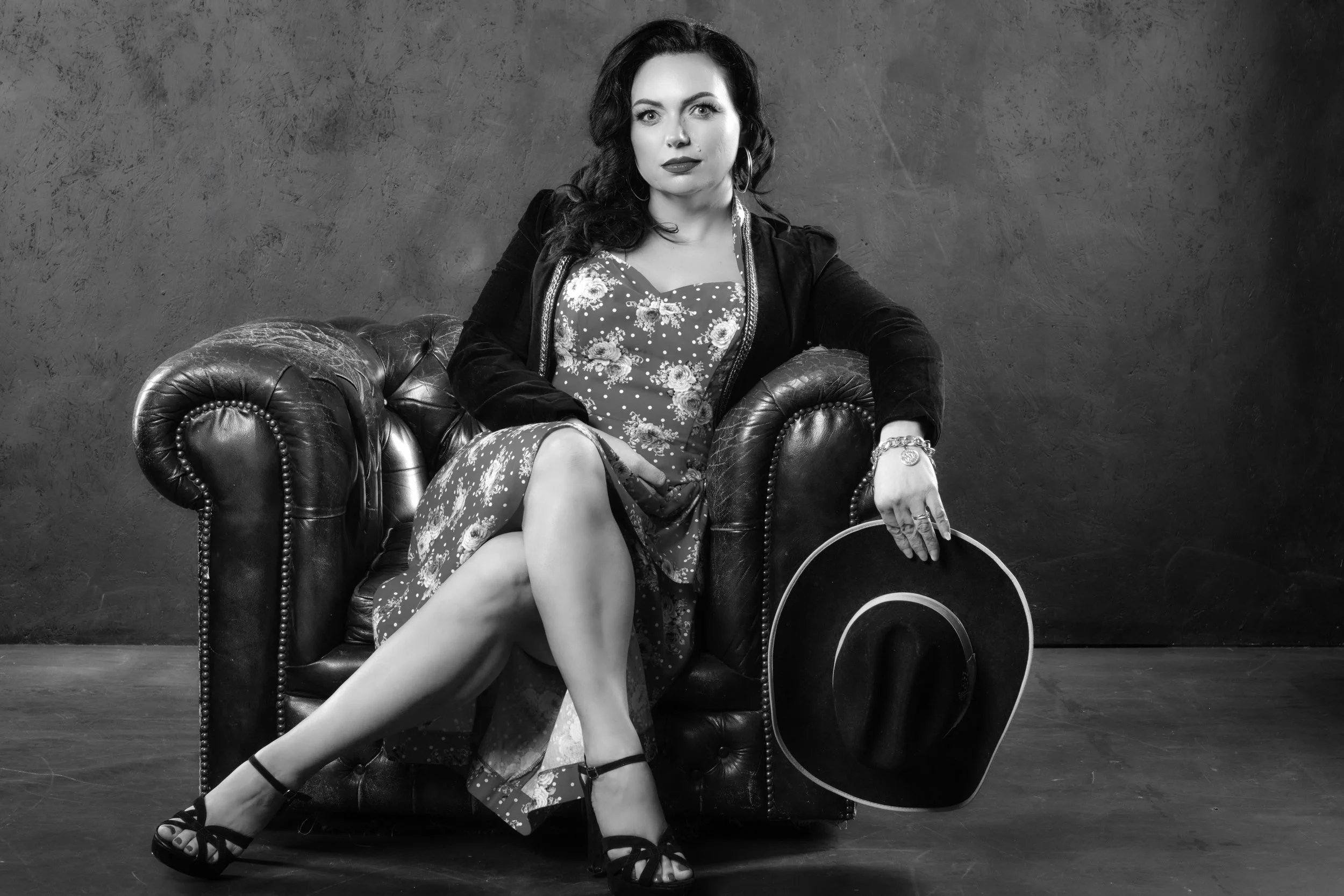
Black and white studio portrait of Dani West, Wild Records recording artist, seated in a leather Chesterfield armchair holding a cowboy hat, against a dark textured backdrop.